
Kitchen trends change, but contrast, useful lighting, and balanced proportions remain helpful design tools. This guide looks at material choices, dark surface combinations, and ways to build a room you will still enjoy after its newness wears off. Start with the finishes you intend to keep rather than trying to copy an entire photograph.
Why Dark Surfaces Remain Popular
A dark worktop outlines pale cabinetry and creates a clear horizontal line. That contrast can help a simple room feel finished without adding extra decoration. On a kitchen island, it can distinguish the gathering area from the surrounding storage while keeping the overall palette restrained.
Wood, brass, and warm white paint can prevent a dark surface from feeling cold. The grain of oak or walnut adds variation, while metal introduces small points of reflection. Keep one or two finishes consistent across the room so the different materials feel connected rather than collected at random.
Polished stone reflects light and often shows greater color depth. Honed and matte finishes offer a quieter appearance, while a leathered texture can emphasize natural character. These finishes do not all have the same care needs, so compare actual samples and cleaning guidance before choosing by appearance alone.
A neutral dark surface can accommodate changes in wall paint, stools, lighting, or hardware over time. This flexibility is one reason it works across traditional and contemporary interiors. It does not guarantee a timeless result, but it leaves room for smaller updates instead of requiring a complete replacement.
Popular Black Countertop Materials
Granite
Dark granite offers natural mineral patterns, strength, and good heat resistance. Some slabs appear almost uniform; others contain visible grains or veins. Ask about sealing needs for the actual selection, and continue using trivets and cutting boards. Natural variation means the full slab deserves a closer look than a small sample.
Quartz
Engineered quartz provides more controlled patterns and a nonporous surface that does not require routine sealing. Designs range from quiet backgrounds to dramatic white or gold-toned veins. It suits homeowners who want straightforward cleaning, but excessive heat can damage it. Its consistent appearance should not be mistaken for complete immunity to stains or scratches.
Marble
Dark marble can create striking contrast through pale veining and rich color. It is more sensitive to acids than granite or quartz and can develop etched areas even when sealed. Choose it if you appreciate how it changes with use, rather than expecting a permanently untouched finish in a heavily used cooking area.
Soapstone
Soapstone has a soft-looking surface and can develop a darker, lived-in appearance. Some owners use oil or wax to deepen the color, following their supplier's recommendations. The stone is relatively soft and can scratch, so its appeal includes accepting character and wear rather than avoiding every visible mark.
Quartzite
Natural quartzite offers distinctive patterns and can be a durable option, but stone sold under that name varies. Confirm the material's identity, sealing needs, and performance with the supplier. Do not assume it has the same maintenance requirements as engineered quartz simply because the names sound similar.
Design Ideas for Dark Surfaces
Pair With White or Light Wood Cabinets
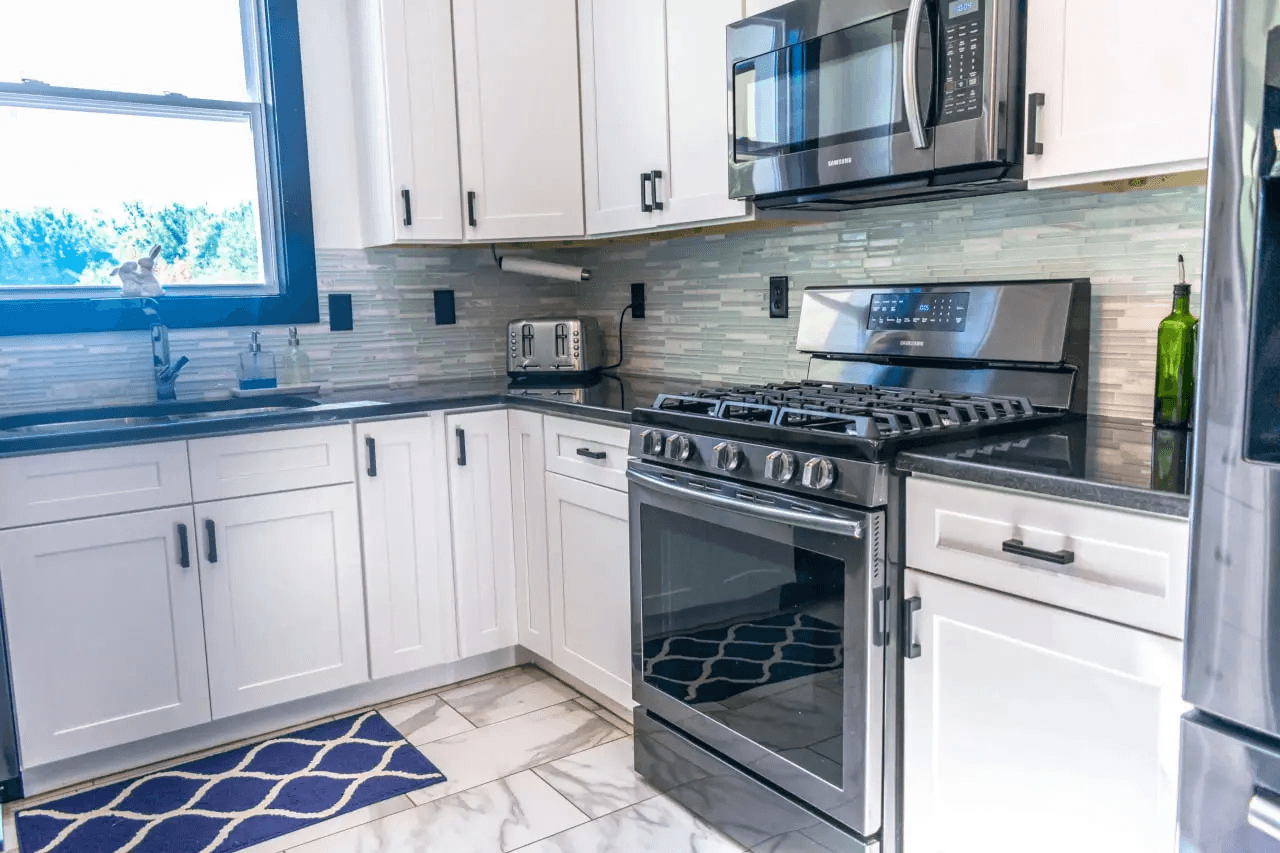
White doors create a clear contrast, while pale wood softens the transition between light and dark. Repeat the worktop color in a small detail, such as a light fixture or hardware, to connect the room. A restrained backsplash can keep the combination from becoming visually crowded.
Make an All-Black Kitchen Legible
An all-black kitchen needs differences in texture, reflection, and light so its shapes remain visible. Combine a matte cabinet finish with a more reflective counter, or introduce wood flooring and a lighter ceiling. Under-cabinet lights should illuminate the work area, not merely add a decorative glow.
Use Veining as the Main Feature
Strong white or gold-toned movement can act as the room's focal point. Give that pattern space by keeping nearby tile and flooring quieter. Review slab layout and seam locations before fabrication, especially if you want the design to continue across a waterfall edge or around a corner.
Coordinate Warm Metallic Accents
Brass, bronze, or copper can soften a dark palette, but their undertones and sheen should relate to one another. A brushed faucet and similar cabinet pulls usually feel calmer than several competing metallic finishes. Use a sample board to see the group together before committing to fixtures.
Consider a Matching Backsplash
Extending the same material up the wall can create continuity and reduce the number of competing finishes. It also makes the slab pattern more prominent, so review a larger image of the material. Plan outlets, edges, corners, and lighting before approving a full-height installation.
Kitchen countertops sit beside cabinets and flooring that are expensive to replace. Begin with those relationships, then select decorative details. A fashionable accessory is easy to change; an awkward undertone between the stone and cabinets will remain visible every day.
Dark surfaces may reveal dust, fingerprints, or dried water more clearly than patterned midtones. Test how a sample looks under your room lighting and ask about the exact finish's cleaning needs. A beautiful surface is a better long-term choice when its upkeep fits your habits.
An all-black style can work without also adding dramatic veining, patterned floors, shiny mosaics, and oversized metallic hardware. Choose the feature you care about most and let the others support it. This produces a clearer kitchen design and gives future updates more flexibility.
Place samples horizontally and view them in daylight and evening light. Look from the adjoining room too, since the counter may become part of a larger open-plan view. For a Winston-Salem, North Carolina, project, bring the complete palette to East Coast Granite of Winston-Salem and discuss material suitability, available finishes, and the planned layout.